
The History of Hugarafl
A brief overview of our Journey
The History of Hugarafl
A brief overview of our Journey
The History of Hugarafl
A brief overview of our Journey
Hugarafl founded in 2003
Much to Contribute
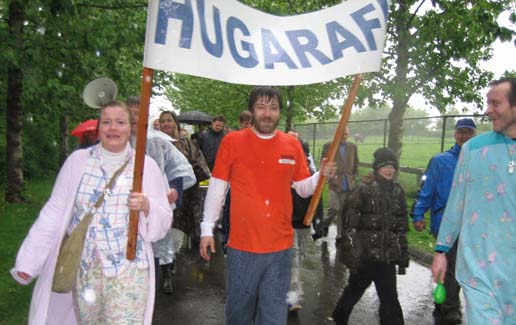
Hugarafl was founded in June 2003 by an occupational therapist with extensive experience in mental health and four people with lived experience who were on their recovery journeys. The group already knew each other well and had worked together in another setting. They knew they had a great deal to contribute and decided to join forces. They began meeting in the Reykjavík Botanic Garden in Laugardalur, where their ideas began to take shape, develop and eventually become reality. The five founders had ambitious goals when they decided to establish Hugarafl and chose to take a different path from what was customary at the time. They brought their ideas together and followed their shared vision and desire to make an impact and bring about change in society.
Much to Contribute
Hugarafl was founded in June 2003 by an occupational therapist with extensive experience in mental health and four people with lived experience who were on their recovery journeys. The group already knew each other well and had worked together in another setting. They knew they had a great deal to contribute and decided to join forces. They began meeting in the Reykjavík Botanic Garden in Laugardalur, where their ideas began to take shape, develop and eventually become reality. The five founders had ambitious goals when they decided to establish Hugarafl and chose to take a different path from what was customary at the time. They brought their ideas together and followed their shared vision and desire to make an impact and bring about change in society.
Much to Contribute
Hugarafl was founded in June 2003 by an occupational therapist with extensive experience in mental health and four people with lived experience who were on their recovery journeys. The group already knew each other well and had worked together in another setting. They knew they had a great deal to contribute and decided to join forces. They began meeting in the Reykjavík Botanic Garden in Laugardalur, where their ideas began to take shape, develop and eventually become reality. The five founders had ambitious goals when they decided to establish Hugarafl and chose to take a different path from what was customary at the time. They brought their ideas together and followed their shared vision and desire to make an impact and bring about change in society.
An Active User-Led Community
Empowerment in Practice
Hugarafl is by far the largest active group of mental health service users in Iceland, and we are not aware of a group of comparable size being actively involved in this way elsewhere in the Nordic countries. Today, Hugarafl has around 270 members, and its activities have grown significantly in recent years. Two meetings are held each week where members discuss Hugarafl’s activities, ongoing projects and their progress. Empowerment is explored weekly, as is the Recovery Model, alongside discussions about what is currently most important to each individual and many other topics. Professionals and people with lived experience work side by side and make decisions together. All discussions take place on an equal footing. Everyone is encouraged to make their voice heard, form and express their own views, and participate actively. Hugarafl provides a space where the experience and knowledge of people who have faced mental health challenges can be valued and used constructively in each person’s recovery journey. Members share their experiences and provide one another with inspiration, peer support and encouragement. The group’s goals are to influence and contribute to the development of Iceland’s mental health system; reduce stigma; maintain a visible presence through a wide range of projects and active participation in public dialogue; increase knowledge and understanding of recovery and recovery processes; strengthen collaboration between people with lived experience and professionals and demonstrate what this looks like in practice; promote greater diversity in services for people experiencing mental health challenges; and advocate for their human rights.
Empowerment in Practice
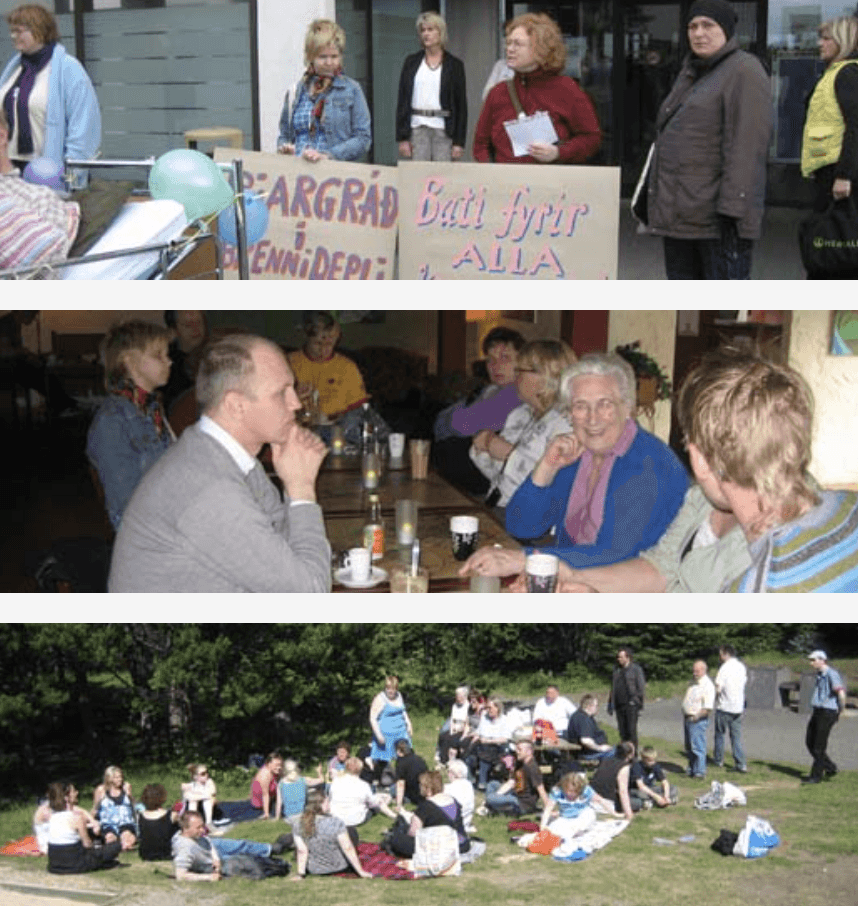
Hugarafl is by far the largest active group of mental health service users in Iceland, and we are not aware of a group of comparable size being actively involved in this way elsewhere in the Nordic countries. Today, Hugarafl has around 270 members, and its activities have grown significantly in recent years. Two meetings are held each week where members discuss Hugarafl’s activities, ongoing projects and their progress. Empowerment is explored weekly, as is the Recovery Model, alongside discussions about what is currently most important to each individual and many other topics. Professionals and people with lived experience work side by side and make decisions together. All discussions take place on an equal footing. Everyone is encouraged to make their voice heard, form and express their own views, and participate actively. Hugarafl provides a space where the experience and knowledge of people who have faced mental health challenges can be valued and used constructively in each person’s recovery journey. Members share their experiences and provide one another with inspiration, peer support and encouragement. The group’s goals are to influence and contribute to the development of Iceland’s mental health system; reduce stigma; maintain a visible presence through a wide range of projects and active participation in public dialogue; increase knowledge and understanding of recovery and recovery processes; strengthen collaboration between people with lived experience and professionals and demonstrate what this looks like in practice; promote greater diversity in services for people experiencing mental health challenges; and advocate for their human rights.
Empowerment in Practice
Hugarafl is by far the largest active group of mental health service users in Iceland, and we are not aware of a group of comparable size being actively involved in this way elsewhere in the Nordic countries. Today, Hugarafl has around 270 members, and its activities have grown significantly in recent years. Two meetings are held each week where members discuss Hugarafl’s activities, ongoing projects and their progress. Empowerment is explored weekly, as is the Recovery Model, alongside discussions about what is currently most important to each individual and many other topics. Professionals and people with lived experience work side by side and make decisions together. All discussions take place on an equal footing. Everyone is encouraged to make their voice heard, form and express their own views, and participate actively. Hugarafl provides a space where the experience and knowledge of people who have faced mental health challenges can be valued and used constructively in each person’s recovery journey. Members share their experiences and provide one another with inspiration, peer support and encouragement. The group’s goals are to influence and contribute to the development of Iceland’s mental health system; reduce stigma; maintain a visible presence through a wide range of projects and active participation in public dialogue; increase knowledge and understanding of recovery and recovery processes; strengthen collaboration between people with lived experience and professionals and demonstrate what this looks like in practice; promote greater diversity in services for people experiencing mental health challenges; and advocate for their human rights.
Pioneers
Wide-Ranging Impact
Through its work, Hugarafl has had a significant impact, and for many years the group has been consulted on policy development within government ministries, the City of Reykjavík and Landspítali – The National University Hospital of Iceland, to name just a few. Hugarafl is also regularly invited to share knowledge and perspectives on mental health promotion, the lived experience of mental health challenges, recovery processes, empowerment and the Recovery Model. Through its advocacy, Hugarafl has played an important role in changing and improving Iceland’s mental health system. For example, the concepts of recovery and empowerment are now widely used within the system, whereas they were hardly known when Hugarafl began its work. Empowerment and the Recovery Model are deliberately applied as guiding principles and approaches to strengthen both the work of Hugarafl and the individual. In this way, the community supports prevention, personal recovery and rehabilitation.
Wide-Ranging Impact
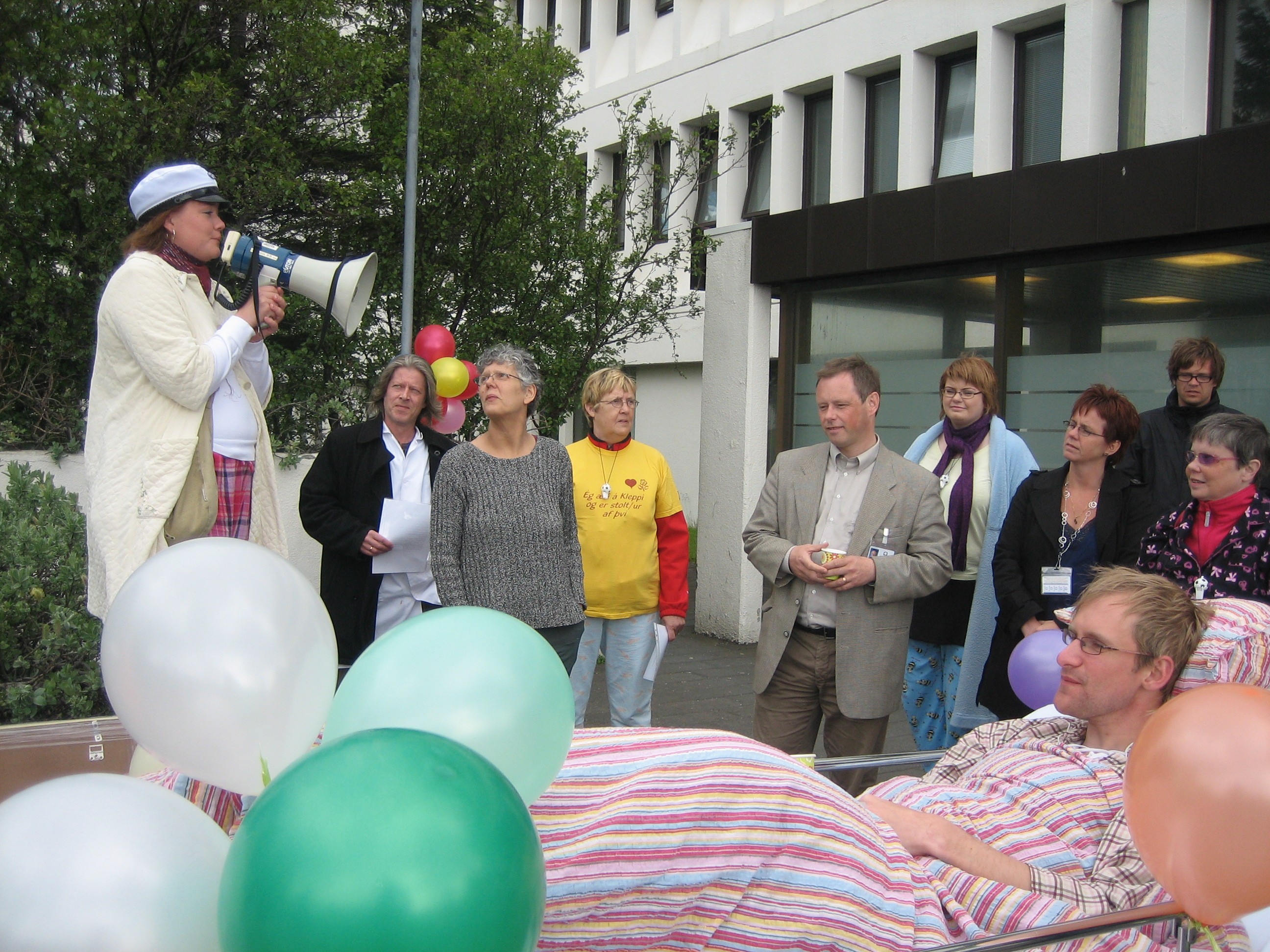
Through its work, Hugarafl has had a significant impact, and for many years the group has been consulted on policy development within government ministries, the City of Reykjavík and Landspítali – The National University Hospital of Iceland, to name just a few. Hugarafl is also regularly invited to share knowledge and perspectives on mental health promotion, the lived experience of mental health challenges, recovery processes, empowerment and the Recovery Model. Through its advocacy, Hugarafl has played an important role in changing and improving Iceland’s mental health system. For example, the concepts of recovery and empowerment are now widely used within the system, whereas they were hardly known when Hugarafl began its work. Empowerment and the Recovery Model are deliberately applied as guiding principles and approaches to strengthen both the work of Hugarafl and the individual. In this way, the community supports prevention, personal recovery and rehabilitation.
Wide-Ranging Impact
Through its work, Hugarafl has had a significant impact, and for many years the group has been consulted on policy development within government ministries, the City of Reykjavík and Landspítali – The National University Hospital of Iceland, to name just a few. Hugarafl is also regularly invited to share knowledge and perspectives on mental health promotion, the lived experience of mental health challenges, recovery processes, empowerment and the Recovery Model. Through its advocacy, Hugarafl has played an important role in changing and improving Iceland’s mental health system. For example, the concepts of recovery and empowerment are now widely used within the system, whereas they were hardly known when Hugarafl began its work. Empowerment and the Recovery Model are deliberately applied as guiding principles and approaches to strengthen both the work of Hugarafl and the individual. In this way, the community supports prevention, personal recovery and rehabilitation.